https://asbury.fillout.com/preproductionformRochester and Oakland County homeowners face some of the harshest roofing conditions in the country. Here’s exactly what’s happening up there — and what you can do about it.
 Serving Rochester, MI and the greater Oakland County area — including Troy, Auburn Hills, Lake Orion, Clarkston, and surrounding communities.
If you’ve lived in Michigan for more than a year, you already know: our weather doesn’t play nice. From sub-zero January nights to humid August heat waves, from spring ice dams to fall windstorms, your roof is under constant attack — 365 days a year.
The problem is, most of that damage happens slowly and silently. By the time you notice a stain on your ceiling or a shingle in your yard, the damage has often been building for months — sometimes years. For Rochester homeowners and families across Oakland County, understanding how Michigan’s four seasons affect your roof is the first step toward protecting one of your biggest investments.
This guide breaks it all down: what’s happening to your roof in each season, the warning signs to watch for, and — most importantly — how to stop small problems before they become expensive repairs or full replacements.
Michigan’s 4-Season Attack on Your Roof
No other state swings as wildly through all four seasons as Michigan. That’s not just a local boast — it’s a genuine roofing challenge. Each season brings a unique set of threats:
 WINTER
 SPRING
 SUMMER
 FALL
FALLWinter: The Biggest Threat to Rochester Roofs
Michigan winters are brutal, and Oakland County is no exception. Rochester typically receives 40–50 inches of snow per year, and temperatures regularly drop below 10°F. For your roof, this means several specific dangers:
Ice dams — the silent destroyer
Ice dams are one of the most common — and most damaging — winter roofing problems in Michigan. They form when heat escapes from your attic, warms the roof deck, and melts the bottom layer of snow. That water runs down to the cold eaves, refreezes, and creates a dam of ice. Behind the dam, meltwater pools and backs up under your shingles.
The result? Water seeping into your attic, insulation, walls, and ceilings. Over time, this causes structural rot, mold growth, and interior water damage that can cost thousands to repair.
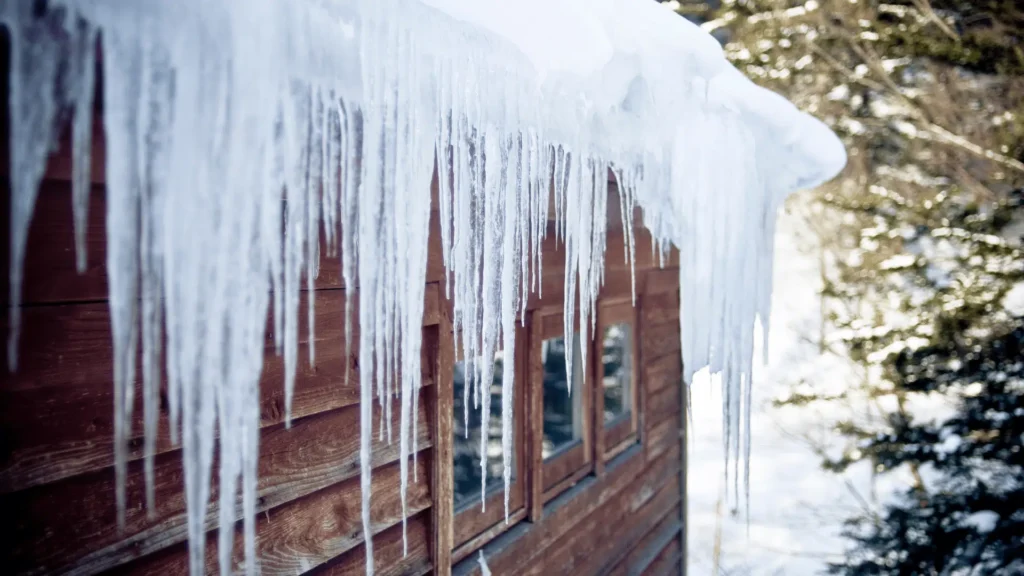
Warning sign to watch for:Large icicles hanging from your gutters or eaves aren’t just pretty — they’re a sign that an ice dam may be forming. If you see icicles after a snowfall followed by a warm spell, call a roofing professional before the next freeze cycle.
Freeze-thaw cycles crack everything
Oakland County regularly experiences dramatic temperature swings — sometimes 40°F or more in a single day during late winter and early spring. Water that seeps into tiny cracks in your shingles, flashing, or sealant expands when it freezes and contracts when it thaws. Over multiple cycles, this forces cracks wider and wider until water can freely enter your roof system.
Snow load and structural stress
A foot of wet Michigan snow can weigh 20 pounds per square foot. Most residential roofs are designed to handle this, but older roofs, roofs with pre-existing structural issues, or roofs with poor ventilation are at higher risk. If you ever hear creaking or notice sagging areas, that’s a structural red flag that needs immediate attention.
Spring: Uncovering Winter’s Damage
Spring in Michigan is beautiful — but it’s also when winter’s damage becomes visible (and often gets worse before it gets better). Rapid snowmelt dumps large amounts of water on your roof in a short time, and if your gutters are clogged from fall debris, that water has nowhere to go.
Gutter overflow and fascia rot
Clogged gutters in spring cause water to back up along the roofline, saturating the fascia boards and soffit. Over time, this leads to rot, mold, and pest entry points. In Oakland County’s spring rains, this happens faster than most homeowners realize.
Wind-driven rain finds every weak spot
Spring storms in Michigan can bring sustained winds of 30–50 mph with gusts even higher. Wind-driven rain is uniquely destructive because it pushes water horizontally — forcing it under shingles, around flashing, and into areas that vertical rain never reaches.
Spring is your best inspection window
The good news: spring is the ideal time for a post-winter roof inspection. Ice and snow are gone, damage is visible, and you have time to make repairs before summer storms arrive. We recommend scheduling a professional inspection every spring for any home in the Rochester area.
- Look for missing, cracked, or curling shingles from the ground or safely from a ladder
- Check gutters and downspouts for clogs, sagging, or separation from the fascia
- Inspect flashing around chimneys, skylights, and vents for gaps or rust
- Look inside your attic for water stains, mold, or daylight coming through the roof deck
- Check soffits and fascia for soft spots, rot, or paint peeling
- Note any areas where granules from shingles have washed into gutters
Summer: Heat, UV, and Severe Storms
Michigan summers may feel mild compared to southern states, but don’t let that fool you. Oakland County summers bring their own serious roofing threats — and they often strike fast.
UV degradation ages your shingles faster
Asphalt shingles contain granules that protect the underlying material from UV radiation. Over time — accelerated by direct sun exposure — those granules break down and wash away. Once the granule layer is depleted, shingles become brittle, crack, and lose their waterproofing ability. You’ll typically see this as bald patches on shingles or an accumulation of granules in your gutters.
Thermal expansion stresses your roof system
On a hot Michigan summer day, your roof surface can reach 150°F or higher. When temperatures drop at night, that same surface cools rapidly. This daily expansion and contraction cycle stresses nails, seams, and flashing — gradually loosening connections and opening gaps for water entry.
Hail and severe thunderstorms
Southeast Michigan sees frequent summer thunderstorms, and Oakland County is no stranger to hail. Even small hail (½ inch diameter) can crack and dent asphalt shingles, leaving them permanently weakened. Larger hail causes visible bruising and granule loss. After any significant hail event, a professional inspection is strongly recommended — hail damage often voids manufacturer warranties if not addressed promptly.
After a major storm:Don’t wait for interior signs of damage to appear. By the time you see a water stain on your ceiling, water has likely been entering your roof system for weeks. After any storm with winds over 50 mph or hail, schedule a free roof inspection right away.
Fall: Prepare Now or Pay Later
Fall is the most critical season for proactive roof maintenance in Michigan. What you do (or don’t do) in September and October directly determines how your roof handles the winter ahead.
Leaves and debris clog everything
Oakland County is full of beautiful mature trees — maples, oaks, and elms that drop millions of leaves every fall. Those leaves pack into gutters, accumulate on low-slope roof sections, and trap moisture against your shingles. Wet leaf debris accelerates shingle degradation and creates the perfect breeding ground for moss and algae.
Early freeze cycles catch homeowners off guard
Michigan’s first hard freeze can arrive as early as late October. Any maintenance issues left unaddressed — cracked sealant, loose flashing, clogged gutters — will be frozen in place for months, and the freeze-thaw cycle will make them worse all winter long.
Fall is your last chance to prep for winter
A fall roof inspection and gutter cleaning before Thanksgiving is one of the most cost-effective investments a Rochester-area homeowner can make. Identifying and fixing small issues in October is dramatically cheaper than emergency repairs in January.
Fall maintenance priorities:Clean gutters after peak leaf fall (late October–November), trim overhanging branches, inspect and reseal flashing, and schedule a professional roof assessment before the ground freezes.
Signs Your Roof Needs Immediate Attention
No matter the season, these are the red flags that mean you should call a roofing professional right away — don’t wait for your next scheduled inspection:
- Water stains on ceilings or walls — especially after heavy rain or snowmelt
- Missing or visibly damaged shingles — even one missing shingle is a water entry point
- Daylight visible from your attic — if light gets in, so does water
- Sagging roof deck or rafters — a structural issue requiring urgent repair
- Granules in gutters or downspout runoff — accelerated shingle aging
- Mold or mildew smell in your attic or upper floors — often tied to roof leaks
- Flashing that is lifted, cracked, or missing around chimneys, skylights, or vents
- Energy bills that have unexpectedly increased — could indicate attic heat loss from roof damage
How to Protect Your Roof Year-Round: A Practical Plan
Protecting your roof isn’t about one big repair — it’s about consistent, seasonal attention. Here’s a simple framework for Rochester and Oakland County homeowners:
Invest in quality materials from the start
If your roof is due for replacement, choose materials designed for Michigan’s climate. Impact-resistant shingles (Class 3 or Class 4) can significantly reduce hail damage and may qualify you for an insurance discount. Proper ice and water shield installation along eaves and valleys is non-negotiable in our freeze-thaw climate.
Don’t neglect gutters
Your gutter system is a critical part of your roof’s drainage design. Clean them at minimum twice per year — spring and late fall — and consider gutter guards if you have heavy tree coverage. Properly functioning gutters prevent 90% of common fascia and foundation water damage.
Ventilate and insulate your attic properly
As mentioned earlier, attic ventilation and insulation are your best weapons against ice dams. A well-insulated attic keeps your living space comfortable, reduces your energy bills, and prevents the uneven snowmelt patterns that create ice dams in the first place.
Schedule professional inspections annually
Professional roof inspectors can identify damage and deterioration that isn’t visible from the ground or to an untrained eye. Annual inspections — ideally in spring after winter ends and again in fall before winter begins — catch small issues before they become major repairs.
Address repairs immediately — don’t wait
In roofing, small problems compound. A cracked piece of flashing that costs $150 to repair today can lead to a $3,000 interior repair job if left through a Michigan winter. The most expensive words in home maintenance are “I’ll deal with it later.”
Why Rochester and Oakland County Homeowners Trust Local Experts
There’s a real difference between a contractor who has worked on roofs in Georgia and one who has spent years solving Michigan-specific roofing challenges. Our team understands Oakland County’s unique weather patterns, knows which materials perform best in our climate, and has seen firsthand how the freeze-thaw cycles, lake-effect moisture, and summer storms affect local homes.
We service Rochester, MI and surrounding Oakland County communities — including Troy, Auburn Hills, Lake Orion, Clarkston, Pontiac, and more. Whether you need a minor repair, a full roof replacement, new gutters, siding, or even a solar installation that works with your existing roof system — we’re here to help.
Get a free roof inspection today
Serving Rochester, MI and all of Oakland County — no pressure, no obligation.
Frequently Asked Questions
How often should I have my roof inspected in Michigan?
We recommend at least once per year, ideally in spring after winter ends. If your roof is over 15 years old, twice a year — spring and fall — is a smart investment. After any major storm with hail or high winds, an inspection is always warranted.
How do I know if I have an ice dam?
Large icicles along your eaves, ridges of ice at the roof edge, and water staining on interior ceilings or walls during or after a winter thaw are the most common signs. Ice dams often cause damage that isn’t visible until spring.
How long does a roof last in Michigan?
A standard asphalt shingle roof in Michigan typically lasts 20–30 years, depending on material quality, installation, ventilation, and maintenance history. Michigan’s climate is harder on roofing materials than many parts of the country, so proper maintenance is key to reaching full lifespan.
Does homeowners insurance cover storm or hail damage in Oakland County?
Most standard homeowners insurance policies cover sudden and accidental storm damage, including hail and wind. However, damage caused by neglect or lack of maintenance is typically not covered. Documenting damage promptly and working with a licensed local contractor — rather than an out-of-state storm chaser — ensures the best outcome on your claim.
What’s the best roofing material for Michigan’s climate?
Architectural (dimensional) asphalt shingles are the most popular and cost-effective choice for Michigan homes. For maximum durability, impact-resistant Class 4 shingles offer superior protection against hail. Metal roofing is also an excellent long-term option — it handles ice, snow, and thermal cycling exceptionally well and can last 40–70 years.
Can I install solar panels on my existing roof?
Yes — and if your roof is in good condition, solar is an excellent long-term investment for Oakland County homeowners. We assess your existing roof as part of every solar consultation to ensure it can support a panel system for 25+ years. If repairs or replacement are needed first, we can handle both in a coordinated project.